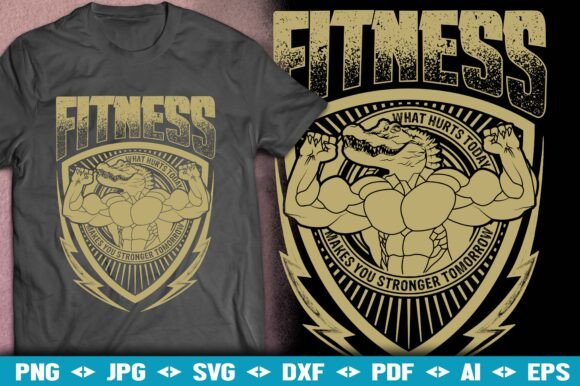
Fitness T-shirt Design: A Practical Review for Embroidery
As a designer who has spent countless hours digitizing and stitching out patterns, I approach every new Fitness T-shirt Design with a critical eye. It is not enough for a graphic to look good on a screen; it must translate seamlessly into thread, withstand the tension of the hoop, and maintain its integrity after washing. When I first opened the zip file for this particular design, my immediate focus was on usability and versatility. The package includes SVG, PNG, JPG, PDF, EPS, and AI formats, which suggests a workflow that bridges digital printing and physical embroidery. However, for those of us running craft businesses or creating handmade products, the real test is how these assets perform when put under the needle.
First Impressions and Visual Mood
The visual personality of this Fitness T-shirt Design leans toward motivation and energy. The layout is balanced, avoiding overly complex clusters that often cause thread breaks or bird nests in smaller hoops. For embroidery designers, this simplicity is a virtue. It allows the texture of the thread to shine without getting lost in microscopic details. The mood is active yet clean, making it suitable for a wide range of applications beyond just gym wear. Whether you are an Etsy seller looking to expand your catalog or a hobbyist making personalized gifts, the aesthetic feels modern and professional.
When evaluating T-Shirt Designs and Graphics, I always look for clear lines and distinct shapes. This design delivers that clarity. It does not rely on subtle gradients that are impossible to replicate with standard embroidery threads. Instead, it uses bold forms that will read well from a distance, which is crucial for apparel that is meant to be seen and worn with pride.
Real-World Application: The Custom Sweatshirt Scenario
To truly understand the value of this asset, let us consider a real-life scenario. Imagine a client requests a custom embroidered sweatshirt for their local running club. They want something durable, visible, and stylish. Using this Fitness T-shirt Design, I would first convert the vector files into a machine embroidery format using my preferred digitizing software. Since the source files include AI and EPS, the scaling process is lossless, allowing me to adjust the size perfectly for the left chest or a larger back placement.
In this context, the design works exceptionally well as a sweatshirt embroidery piece. The thicker fabric of a sweatshirt provides a stable base for fill stitches, ensuring the design lays flat. If I were to use this same graphic for a tote bag design, the result would be equally striking. Tote bags often carry heavier loads, so a robust, well-stitched design adds perceived value and durability. Customers appreciate when a handmade product looks professionally finished, and this graphic supports that goal by avoiding fragile, thin lines that might snag.
Navigating Fabric and Hoop Constraints
While the design is versatile, there are areas where caution is necessary. As an experienced reviewer, I must point out that not all fabrics behave the same way. If you plan to use this on stretchy performance wear, proper stabilization is non-negotiable. A cut-away stabilizer is often recommended for knits to prevent puckering. Additionally, if you are working with a small hoop size, you may need to scale down the design. Always check the stitch density before committing to the final garment. High-density areas can make stiff patches on soft fabric, which might be uncomfortable for the wearer.
For those interested in creating an embroidered patch, this design is a strong candidate. Patches require dense stitching to hold the edges together, and the bold nature of this graphic supports that structure. However, if you are attempting to embroider directly onto a curved surface like a cap, you must ensure the design fits within the narrow constraints of a cap frame. Complex corners can sometimes pull or distort on curved surfaces, so a test run on scrap fabric is essential.
Enhancing Product Value and Brand Consistency
For small shop owners and creative entrepreneurs, consistency is key. Using a cohesive set of T-Shirt Designs helps build brand recognition. This Fitness T-shirt Design can serve as a cornerstone for a line of custom apparel. When customers see high-quality stitching and thoughtful design choices, their trust in your brand increases. This translates directly to buyer engagement and higher conversion rates on platforms like Etsy.
Moreover, the inclusion of print-ready files like PNG and JPG allows for the creation of printable mockups. Before you even stitch a single thread, you can present a realistic preview to your clients. This saves time and reduces the risk of misunderstandings. For digital product sellers, offering both the embroidery file and the print-ready graphics can create a bundled offering that appeals to a broader audience, from those who own embroidery machines to those who prefer heat transfer vinyl or direct-to-garment printing.
Practical Notes for the Embroidery Designer
Before you begin your next embroidery project, keep these practical tips in mind:
- Test on Scrap Fabric: Always stitch out a sample on the same type of fabric you intend to use for the final product. This helps you identify any tension issues or registration errors.
- Check Thread Color Contrast: The design may look different depending on the thread colors chosen. Test high-contrast combinations to ensure readability, especially on dark fabrics.
- Review Stitch Density: If the design feels too stiff after stitching, consider reducing the density in your digitizing software or using a lighter weight thread.
- Confirm Hoop Size: Ensure the design dimensions fit comfortably within your machine’s hoop, leaving enough margin for clamping.
- Inspect Small Details: Zoom in on the digital file to check for tiny elements that might not stitch out cleanly. Simplify if necessary.
- Verify Licensing: Although the files are provided for use, always confirm the specific license terms for commercial sales. Ensure you have the right to sell finished items or digital products derived from this design.
In conclusion, this Fitness T-shirt Design is a robust asset for any designer’s toolkit. It balances aesthetic appeal with practical stitchability, making it suitable for everything from baby embroidery on onesies to holiday embroidery on festive aprons. By understanding its strengths and limitations, you can create high-quality, professional-looking products that resonate with customers and stand the test of time. Whether you are crafting a personalized gift or building a craft business, this design offers the flexibility and reliability needed for successful execution.