Review: I Was Made for Sunny Days PNG Design
As a designer who has spent countless hours digitizing artwork and troubleshooting hoop jumps, I approach every new design asset with a critical eye. We often see digital files marketed broadly, but the reality of moving from screen to fabric is where the true test lies. Recently, I evaluated the I Was Made for Sunny Days PNG Design to determine its viability for real-world embroidery projects. While the product description labels this as a sublimation design intended for heat transfer, my focus was on how its visual language translates when adapted for needle and thread in a professional craft business setting.
First Impressions and Visual Mood
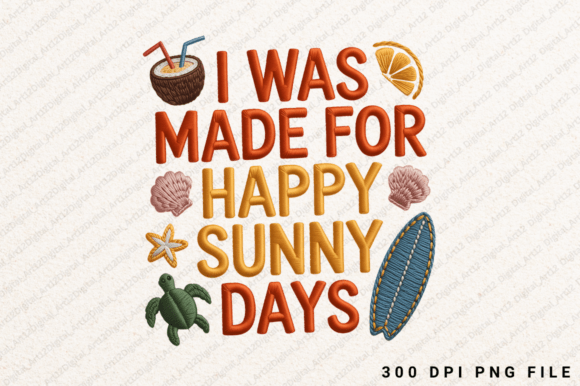
The immediate appeal of the I Was Made for Sunny Days PNG Design lies in its optimistic, carefree energy. The typography suggests a hand-lettered or casual script style, which pairs naturally with warm, summery motifs. For an embroidery designer, this mood dictates specific technical choices. A design that screams "sunshine" cannot be stitched with rigid, industrial precision; it requires a softer touch. The layout appears balanced, offering enough negative space to prevent the fabric from puckering, a common issue with dense fill stitch areas.
When I visualize this as a machine embroidery design, I see it fitting perfectly into the category of lifestyle T-Shirt Designs and casual apparel. It is not overly complex, which is a virtue. Overly detailed Graphics often lose their charm when reduced to thread, but this design’s simplicity suggests it would retain its legibility even at smaller scales. The visual personality is friendly and approachable, making it an ideal candidate for personalized gift items that need to feel handmade rather than mass-produced.
Real-World Application: The Summer Tote Scenario
To truly understand the potential of this asset, I imagined a specific client request: a custom order for a boutique selling eco-friendly summer accessories. The goal was to create a standout tote bag design that would appeal to beachgoers and farmers' market shoppers. Using the I Was Made for Sunny Days PNG Design as the central motif, I considered how it would interact with a heavy canvas texture.
In this scenario, the design would likely require a combination of stitch types. The lettering might benefit from a clean satin stitch to ensure crisp edges, while any accompanying sun or cloud elements could utilize a lighter running stitch or a sparse fill to maintain flexibility. Canvas is sturdy, but it can be unforgiving if the stitch density is too high. By adapting the PNG’s visual weight into a thoughtful embroidery plan, the final product would exude quality. Customers touching the raised threads would perceive higher value compared to a flat printed image, enhancing brand consistency and customer trust.
Versatility Across Product Lines
Beyond tote bags, this design shows promise for various custom apparel items. Imagine it centered on the chest of a lightweight linen shirt or as a pocket accent on a denim jacket. For Etsy sellers and small shop product creators, versatility is key to maximizing ROI on design assets. This particular motif could easily transition into baby embroidery on onesies, provided the scale is adjusted to suit smaller garments. The cheerful message resonates with parents looking for unique, non-generic clothing for their children.
It also works well for home decor, such as holiday embroidery on kitchen towels or pillow covers for a sunroom. The key is matching the thread colors to the fabric. A bright yellow or orange thread on a white towel creates a pop of energy, while a muted gold on navy blue offers a more sophisticated, nautical vibe. This adaptability makes it a strong contender for commercial embroidery catalogs where one design must serve multiple seasonal needs.
Technical Considerations and Constraints
While the aesthetic is strong, practical application requires caution. Since the source file is described as a PNG for sublimation, it is not a native digital embroidery file like DST or PES. This means you cannot simply load it into your machine. You must either manually digitize it or use auto-digitizing software, both of which require careful oversight. Auto-digitizing often creates excessive stitch density and poor underlay, leading to stiff, unattractive results.
There are specific scenarios where this design needs careful handling:
- Small Hoop Sizes: If scaling down for a embroidered patch or hat front, tiny details in the lettering may merge. Ensure the minimum stroke width is at least 1.5mm to prevent thread breakage or loss of definition.
- Textured Fabrics: On fluffy towels or fleece, the text might get lost. Using a contrasting backing or increasing the stitch height can help, but testing is essential.
- Stretchy Fabric: For t-shirts, proper stabilizer selection is non-negotiable. A cut-away stabilizer is usually best to prevent distortion after washing.
- Dark Fabric: If stitching on black or navy, you may need to adjust the thread colors for visibility. A printable mockup in black and white can help you judge contrast before threading the machine.
Enhancing Value and Professionalism
Using a well-chosen design like I Was Made for Sunny Days PNG Design directly impacts the perceived value of your finished product. In the handmade market, buyers are not just purchasing an item; they are buying the story and the craftsmanship. A design that looks intentional and well-executed signals professionalism. It encourages buyer engagement and shares on social media, which is vital for creative entrepreneurs.
However, professionalism also means respecting intellectual property. Before selling items featuring this design, you must confirm the licensing terms. Does the purchase allow for commercial use of finished goods? Can you sell the digitized version? These questions are critical for digital product sellers and apparel decorators. Never assume a PNG license covers embroidery rights. Always read the fine print to protect your craft business from legal issues.
Practical Designer Notes for Implementation
If you decide to incorporate this design into your workflow, follow these steps to ensure success:
- Test on Scrap Fabric: Never stitch a new design directly on the final garment. Use a similar fabric scrap to check tension and registration.
- Check Thread Color Contrast: View your design in grayscale to ensure the elements stand out against the background fabric.
- Review Stitch Density: If digitizing manually, keep the density moderate to maintain fabric drape, especially for apparel.
- Confirm Hoop Size: Ensure the design fits comfortably within your hoop with adequate margin for clamping.
- Inspect Small Details: Zoom in on the digitized file to check for stray stitches or unnecessary jumps that could cause thread breaks.
- Use Proper Stabilizer: Match the stabilizer to the fabric weight and stretch. Wrong stabilizer choice is the number one cause of embroidery failure.
In conclusion, the I Was Made for Sunny Days PNG Design offers a charming, versatile foundation for summer-themed projects. While it requires technical adaptation from a sublimation graphic to a stitch-ready format, its visual appeal and emotional resonance make it a worthwhile addition to your library. With careful digitizing and thoughtful material selection, it can elevate your handmade product line, delighting customers with its sunny disposition and professional finish.