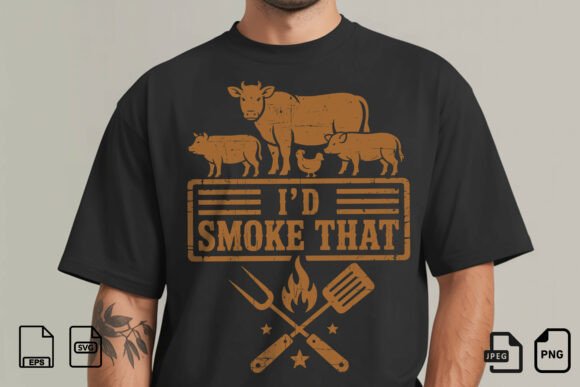
Reviewing the I’d Smoke That BBQ Embroidery Design
As a designer who has spent countless hours digitizing and stitching out graphics for clients, I approach every new machine embroidery design with a mix of curiosity and caution. We have all seen those digital files that look stunning on a screen but turn into a tangled mess of thread breaks and puckering on fabric. Recently, I evaluated the I d Smoke That BBQ T-Shirt Design to determine if it holds up under the needle for real-world applications. This isn’t just about aesthetics; it is about functionality, durability, and commercial viability for your craft business.
First Impressions and Visual Personality
The first thing that strikes you about this graphic is its bold, rustic vintage style. It captures the spirit of barbecue culture immediately, featuring farm animals and a confident, eye-catching layout. For an embroidery project, this visual personality is crucial. It does not try to be subtle. Instead, it leans into a loud, proud aesthetic that appeals directly to grill masters and meat enthusiasts. The layout suggests a balance between illustrative elements and typography, which is often where designs fail in embroidery. If the text is too thin or the animal details are too intricate, they will get lost in the stitch work. However, the robust nature of this design suggests it was created with stitchability in mind, prioritizing clear shapes over fragile lines.
Real-World Application: The Custom Apron Test
To truly understand how this design performs, I imagined a specific scenario: creating a custom embroidered apron for a local butcher shop owner. This is a high-use item that needs to look professional yet playful. When visualizing the I d Smoke That BBQ T-Shirt Design on a heavy canvas or denim apron, the rustic vibe fits perfectly. The design’s weight complements the sturdy fabric texture. Unlike delicate floral patterns that might look out of place on workwear, this graphic commands attention. It transforms a standard kitchen towel or apron into a statement piece, adding significant value to the handmade product. For Etsy sellers and small shop owners, this kind of versatility is gold. It allows you to market the same digital embroidery file across multiple product lines, from home goods to apparel.
Stitching Clarity and Fabric Considerations
When moving from concept to execution, we must consider how the design interacts with different materials. This graphic appears to rely on solid areas, likely utilizing fill stitch techniques to create depth and coverage. This is excellent for stability but requires careful attention to stitch density. On thick fabrics like sweatshirt fleece or tote bag canvas, the design should sit well without sinking in. However, on thinner fabrics, such as a lightweight t-shirt or a baby onesie, you must use a proper stabilizer to prevent puckering.
I would advise against using this on highly stretchy or sheer fabrics unless you are experienced with hooping techniques for difficult materials. The bold shapes need a stable foundation. If you are creating a personalized gift for a newborn, ensure the hoop size accommodates the design without distorting the garment. For curved surfaces like caps, the design’s width must be checked against the cap’s front panel dimensions. A design that is too wide will wrap around the sides, causing distortion and an unprofessional finish.
Commercial Viability for Craft Businesses
For the modern craft business owner, time is money. A design like this saves time because it is inherently recognizable. Customers do not need to decipher abstract art; they see "BBQ" and "Smoke," and they understand the message instantly. This clarity boosts buyer engagement and trust. When listing items on Etsy or at craft fairs, having a strong, thematic graphic helps your products stand out in a crowded marketplace. Whether you are selling embroidered patches, holiday gifts for Father’s Day, or boutique branding items, this design serves as a reliable asset. It fits seamlessly into the category of T-Shirt Designs and Graphics that sell consistently because they tap into a passionate hobbyist community.
Moreover, the vintage aesthetic aligns well with current trends in handmade apparel. It feels authentic rather than mass-produced. This perception of authenticity allows you to charge a premium for your finished product. Buyers are willing to pay more for items that feel unique and crafted with care, and a well-executed embroidery job reinforces that value.
Practical Designer Notes and Precautions
Before you commit to stitching this on a client’s expensive garment, follow these practical steps. First, always test the design on scrap fabric that matches the weight and texture of your final material. Check the thread color contrast carefully. Since the design features rustic elements, earth tones like browns, creams, and deep reds will likely work best, but you should verify how the colors blend in real life versus on your monitor.
Inspect the small details. Are there tiny lettering elements that might become illegible after stitching? If so, consider simplifying the thread palette or increasing the stitch count for those specific areas if your software allows. Review the stitch density settings. High density can cause stiffness, which might be uncomfortable on a t-shirt but desirable on a patch. Use a running stitch for outlines if available to reduce bulk, and ensure satin stitch borders are narrow enough to remain flexible.
It is also vital to confirm licensing terms. While many digital embroidery files allow for commercial use of finished products, some restrict the resale of the digital file itself. Always read the license agreement provided by the creator to protect your business. Additionally, check if the design comes in multiple hoop sizes. Having the option to scale the design for a small pocket emblem or a large back print increases its utility for your inventory.
Final Verdict on Usability
The I d Smoke That BBQ T-Shirt Design is a strong contender for any designer’s library. It balances visual impact with practical stitchability. It is not a delicate, fragile design that requires babying; it is a workhorse graphic meant for durable goods and bold statements. For embroidery designers, it offers a straightforward path to a professional-looking result. For small business owners, it provides a versatile asset that can drive sales across various categories, from custom apparel to home decor. Just remember to respect the technical requirements of embroidery—stabilize well, choose the right thread, and test before you produce. When handled with care, this design delivers a finished product that customers will be proud to wear and use.