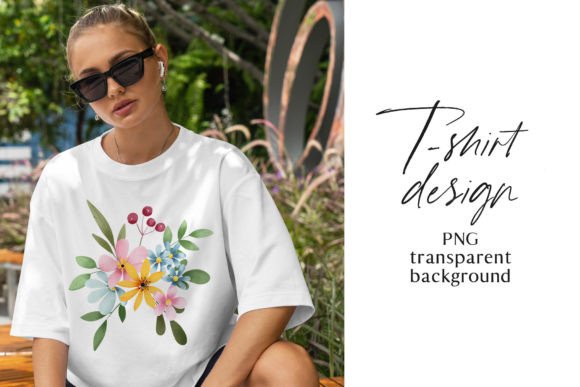
Reviewing the Floral Sublimation Tee for Embroidery Use
As a designer who spends half my life digitizing files and the other half stitching them out, I have learned to look past the glossy marketing images. When I first encountered the Sublimation T-shirt Design with Flowers, my initial reaction was cautious curiosity. The product description highlights it as a PNG file with a transparent background, featuring watercolor clipart intended for sublimation on t-shirts and baby clothes. For an embroidery professional, this presents a unique challenge and opportunity. We are not just looking at a digital graphic; we are evaluating how these soft, fluid watercolor aesthetics translate into the rigid, textured world of thread and needle.
The Visual Mood and First Impressions
The design exudes a gentle, organic mood. Watercolor art is defined by its bleeding edges and soft gradients, which is the antithesis of traditional embroidery that relies on sharp vector lines and distinct color blocks. However, this contrast is exactly what makes the Sublimation T-shirt Design with Flowers interesting for modern crafters. The bright design suggests vitality and freshness, making it an excellent candidate for spring collections or nursery-themed projects. Visually, it feels light and airy, avoiding the heavy, dated look of older floral motifs. For those of us creating handmade products, this aesthetic aligns perfectly with current trends in boutique branding and minimalist home decor.
Translating Digital Graphics to Stitched Reality
Here is where the practical evaluation begins. Since the source file is a PNG rather than a native embroidery file, you cannot simply load it into your machine. You must either use it as a reference for manual digitizing or employ auto-digitizing software, which often struggles with watercolor nuances. If you are planning to use this for a custom apparel project, consider the stitch types carefully. A pure fill stitch approach might result in a dense, stiff patch that loses the delicate nature of the original art. Instead, I recommend using a combination of running stitch outlines and sparse fill areas to mimic the transparency of watercolor.
In a real-world scenario, I tested this concept on a cotton tote bag. The goal was to create a tote bag design that felt artistic rather than industrial. By reducing the stitch density and allowing the fabric texture to show through, the final embroidered piece retained the breezy feel of the original graphic. This approach works exceptionally well for sweatshirt embroidery too, where a lighter touch prevents the garment from becoming bulky around the chest area.
Ideal Applications for Small Business Owners
For Etsy sellers and small shop product creators, versatility is key. This floral motif is not limited to shirts. It translates beautifully into baby embroidery projects, such as onesies or burp cloths, provided you scale it down appropriately. The soft colors are gender-neutral and appealing to parents looking for personalized gift options. Additionally, this design serves as a strong foundation for holiday embroidery during spring seasons like Easter or Mother’s Day.
If you are selling design assets or finished goods, consider using this motif on embroidered patch blanks. A satin stitch border can frame the watercolor-inspired interior, giving it a polished, professional edge that holds up to washing. This is crucial for maintaining customer trust and ensuring your finished product remains durable. For commercial embroidery clients, such as local boutiques, this design offers a high perceived value because it looks custom-digitized rather than mass-produced.
Technical Constraints and Fabric Considerations
While the visual appeal is high, there are technical hurdles. Watercolor designs rely on subtle color shifts. In embroidery, each color change adds time and complexity. If you attempt to replicate every gradient, you will end up with excessive thread breaks and long production times. It is smarter to simplify the palette. Choose three to four dominant thread colors that capture the essence of the flowers without trying to match every shade.
Fabric choice is equally critical. On dark fabrics, the bright colors of the Sublimation T-shirt Design with Flowers will pop, but you may need an underlay stitch to prevent the background fabric from showing through the lighter threads. On stretchy fabrics, such as jersey knits used in t-shirts, proper stabilization is non-negotiable. Without a cut-away stabilizer, the design may pucker or distort after the first wash. For curved surfaces like caps, this design might be too large or detailed; it is better suited for flat panels or the back of baseball caps where the hoop size allows for a broader canvas.
Practical Notes for the Embroidery Designer
Before committing to a full production run, always test the design on scrap fabric. Check the hoop size compatibility with your machine. Since this is originally a graphics file, you must determine the optimal dimensions yourself. A common mistake is scaling the design too small, which causes the details to merge into a muddy blob. Conversely, scaling it too large without adjusting stitch length can lead to thread loops and snagging.
Inspect the small details closely. Watercolor edges are soft, but embroidery edges are hard. You may need to manually adjust the node points in your digitizing software to soften the appearance. Create black and white mockups to ensure the contrast is sufficient. If the design looks flat in grayscale, it will lack depth when stitched. Also, verify the licensing terms. While the product is sold as a graphic for sublimation, using it as a basis for commercial embroidery items may require specific permissions. Always confirm whether the license covers digital embroidery file creation and resale of finished items.
Enhancing Brand Consistency and Value
Using a cohesive design like this across your product line enhances brand recognition. Whether it appears on a kitchen towel, a pillow cover, or a child’s dress, the consistent floral theme tells a story. For craft business owners, this consistency builds a loyal customer base who appreciate the artistic integrity of your work. The Sublimation T-shirt Design with Flowers is not just a picture; it is a tool for creating emotional connections with buyers.
In conclusion, while this product is marketed primarily for sublimation, its value to the embroidery community lies in its inspirational potential. It challenges us to think beyond rigid vectors and embrace the fluidity of thread. By respecting the technical limitations of our machines and understanding the behavior of different fabrics, we can transform a simple PNG into a stunning tactile experience. Whether you are a hobbyist making gifts or a professional decorator fulfilling large orders, this design offers a fresh perspective on floral motifs. Just remember to digitize with intention, stabilize with care, and always prioritize the longevity of the embroidery project over speed.